COrigami
Combines reinforcement learning with Gemini to design origami crease patterns, using a semantic representation and visual feedback loop to fold arbitrary target shapes.
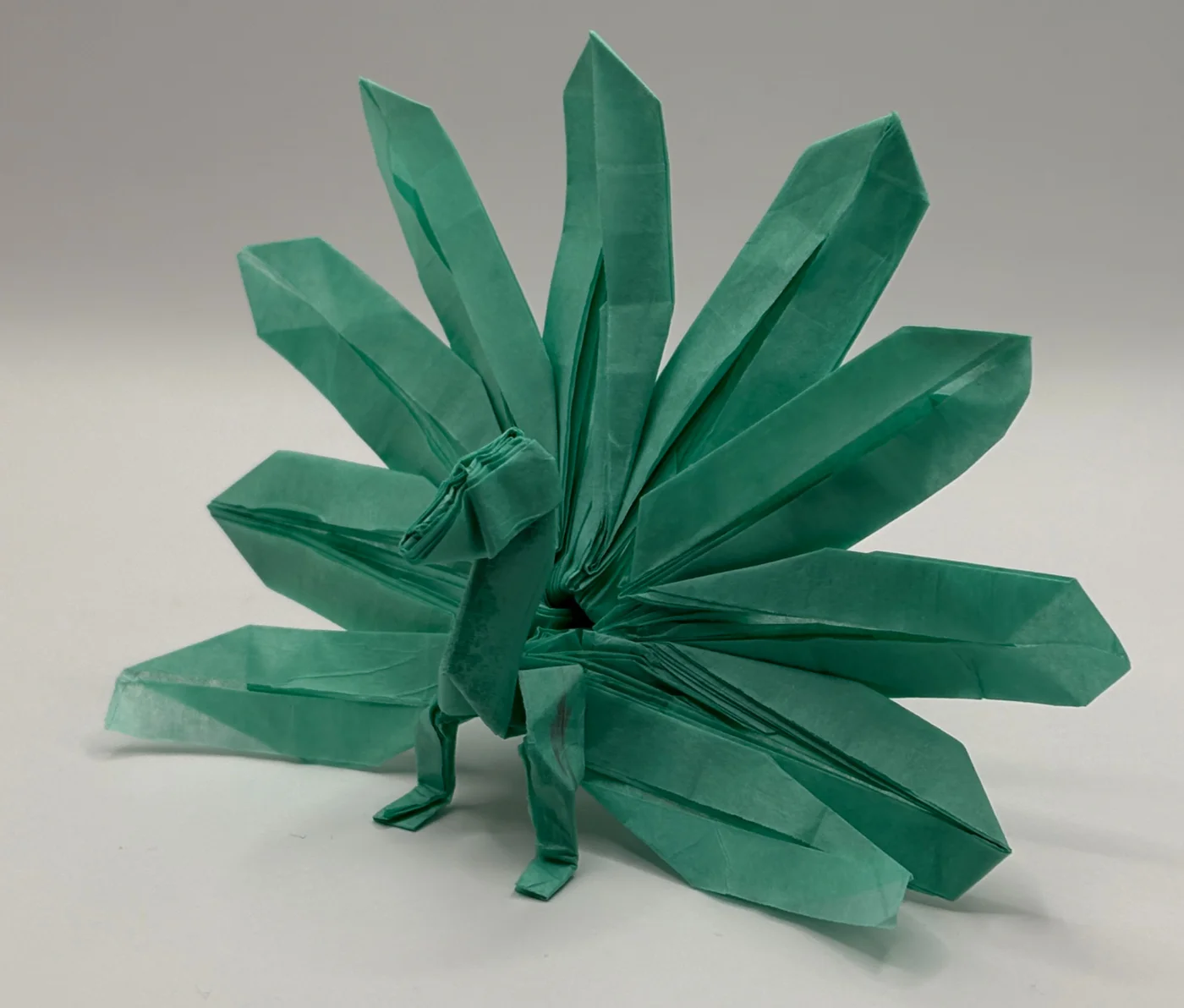
Origami is a uniquely constrained art form: every design must obey the mathematics of flat-foldability while still looking like the thing it depicts. COrigami is an end-to-end AI pipeline that tackles both at once, turning a natural-language prompt into a crease pattern that genuinely folds.
By pairing algorithmic optimisation with an autonomous aesthetic critic and optimising it with RL, the system acts as a collaborative assistant — it produces mathematically sound starting points that human artists can expand and shape into a finished, physical model.
How it works
- 1
Semantic stick figure
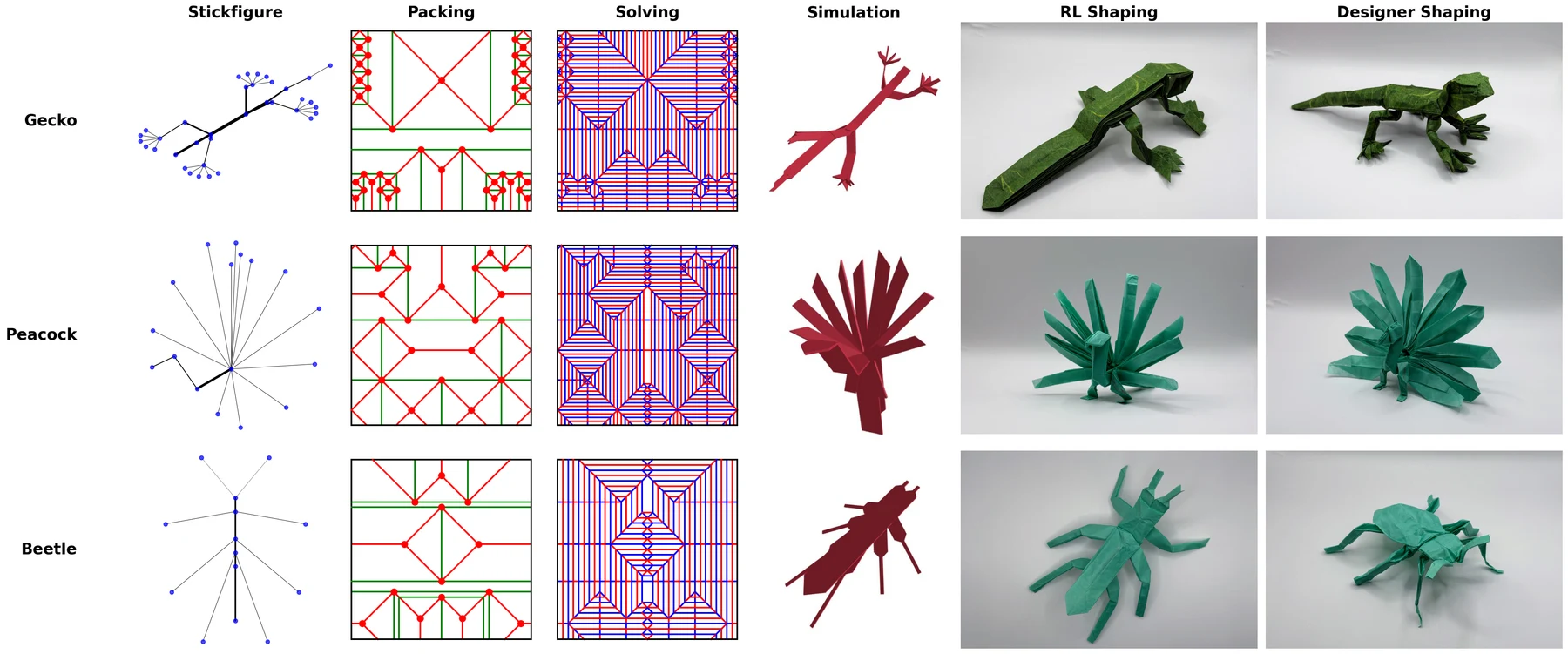
Gemini turns a natural-language prompt into an abstract, structured description of the subject — its parts and proportions.
- 2
Base packing
The stick figure is packed into a base that allocates a region of paper to each limb, flap, and appendage.
- 3
Flat-foldable solving
A solver searches for a crease pattern that provably folds flat, satisfying origami's rigid geometric constraints.
- 4
Shaping
The flat-folded base is shaped into a recognisable three-dimensional form.
- 5
Aesthetic RL loop
A reinforcement-learning loop refines the design, guided by an autonomous critic that scores how good the result looks.
Gallery
Models COrigami designed, folded from its generated crease patterns.
Learn more from origami designers
COrigami was made possible by the origami designers and artists whose craft, crease patterns, and feedback guided this work.
Fold it yourself
An interactive simulator for one of the generated crease patterns — drag to rotate, and use the slider to fold and unfold.